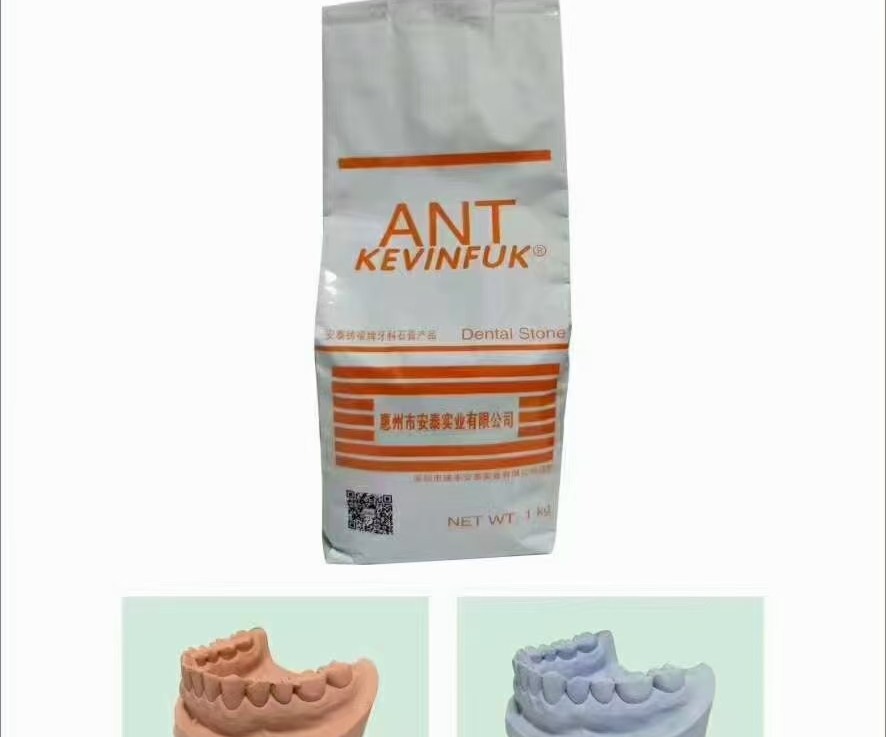
For dental technician students, mastering die stone materials is a cornerstone skill in prosthetic fabrication. While digital tools like 3D printers and scanners are transforming workflows, traditional die stones remain irreplaceable in critical scenarios. Let’s break down how to choose the right material for your cases—and why understanding these options will elevate your craftsmanship.
Why Die Stone Still Matters in the Digital Age
Even with advanced technology, certain clinical demands require the precision and physical properties of die stones. Digital models excel at speed and design flexibility, but they struggle to replicate the tactile feedback, dimensional stability, and material strength of high-quality stones. For example:
- Accuracy under pressure: Zero-expansion stones ensure crowns fit perfectly, even after casting at high temperatures.
- Mechanical durability: Implant cases demand ultra-hard stones (Type IV) to withstand drilling forces during surgical guide fabrication.
Pro Tip: Always cross-check digital designs with a physical die stone model for high-risk cases like full-arch prosthetics or implants.
Die Stone Types: Matching Material to Clinical Needs
Here’s a quick guide to the four main die stone categories and their applications:
1. Type I – Articulator Mounting Stone
- Use: Securing models to articulators for occlusal analysis.
- Why it’s unique: High initial strength allows quick setting, ideal for mounting without distortion.
- Packaging: 25 kg/carton (bulk use in labs).
2. Type II – Model Base Stone
- Use: Creating sturdy bases for diagnostic or working models.
- Student-friendly: Affordable and easy to handle for everyday cases.
- Packaging: 1 kg/bag (25 bags/carton).
3. Type III – Crown & Bridge Stone
- Use: Fabricating detailed dies for single-unit crowns and small bridges.
- Key feature: Balances hardness and detail reproduction (e.g., capturing marginal grooves).
- Packaging: 1 kg/bag (25 bags/carton).
4. Type IV – Super-Hard & Implant Stone
- Use: Surgical guides, implant models, and long-span bridges.
- Critical advantage: Resists chipping during drilling—3D-printed resins often crack under similar stress.
- Packaging: 1 kg/bag (25 bags/carton).
Zero-Expansion Stone
- Use: High-precision cases like zirconia frameworks or multi-unit prosthetics.
- Science-backed: Thermal stability prevents expansion/contraction during casting.
- Packaging: 2 kg/bag (25 kg/carton).
When Digital Can’t Replace Die Stone
While 3D printing is revolutionary, these scenarios still demand traditional stones:
- Legal compliance: Some regions mandate physical models for medical records.
- Tactile adjustments: Fine-tuning occlusal contacts on a digital model? Impossible.
- Education: Students learn critical skills like margin marking and die trimming on physical models.
Case Example: A dental lab recently avoided a remake by using Type IV stone to verify a digitally designed implant guide. The printed resin model fractured during testing, while the stone version held firm.
Choosing Your Supplier Wisely
Quality matters: Subpar stones crumble during trimming or distort under moisture. At Dental Laboratorio, we provide the full spectrum of die stones—from budget-friendly Type II to zero-expansion specialty materials. Our stones are vacuum-mixed for minimal bubbles and certified for ISO compliance.
Student Hack: Request free samples to test flowability and setting time before committing to a bulk order!
Final Thoughts
Digital tools are allies, not replacements, for skilled technicians. By pairing them with the right die stone, you’ll deliver prosthetics that are both precise and durable. Remember: The best technicians don’t just follow protocols—they understand *why* materials behave the way they do.
Ready to upgrade your toolkit? Explore Dental Laboratorio’s die stone range today—where tradition meets innovation for flawless results. 🦷
 dentsma blog